
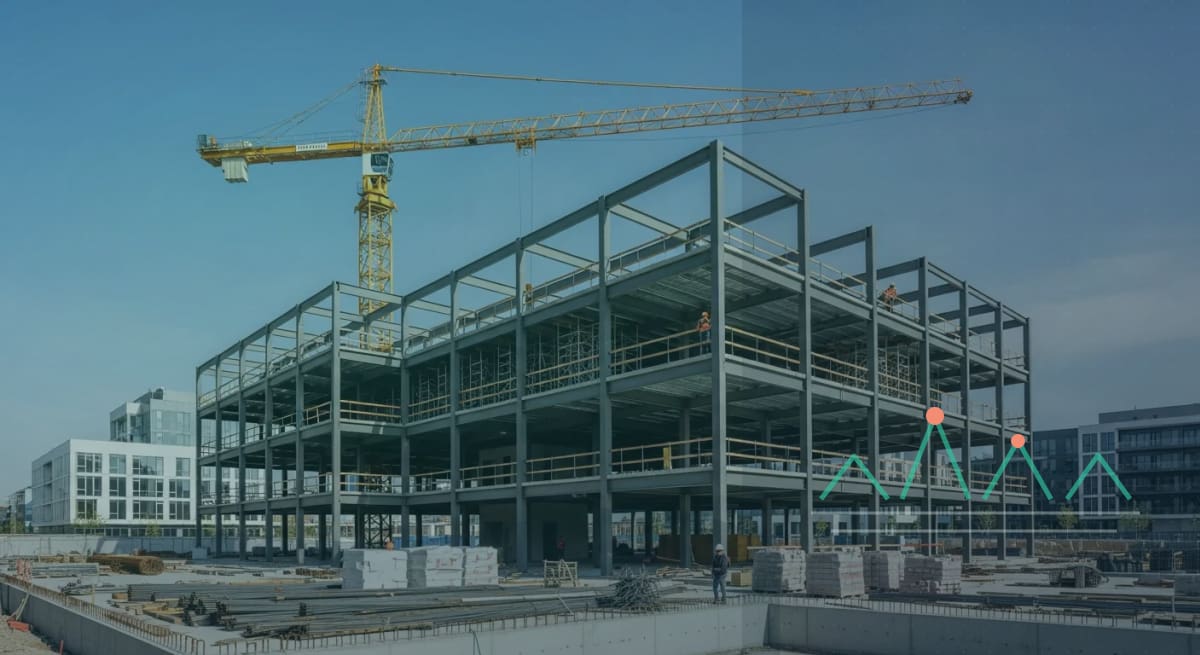
Commercial construction loans fund the building of new structures or major renovation projects, with capital disbursed incrementally as work progresses. Unlike permanent loans that fund fully at closing, construction loans release funds in draws tied to project milestones verified by third party inspectors. This draw based structure protects the lender by ensuring that funds are only advanced for work that has been completed and verified, and it requires the borrower to manage the construction process carefully to keep the project on schedule and within budget.
Key components of a construction loan include the draw schedule, interest reserve, contingency budget, and completion guarantees. The draw schedule outlines when and how funds are released based on specific construction milestones such as foundation completion, framing, mechanical rough in, and final finishes. The interest reserve covers interest payments during the construction period so the borrower does not need to make monthly out of pocket payments while the project generates no income. The contingency budget, typically 5% to 10% of the total construction cost, covers unexpected cost overruns from material price increases, weather delays, or change orders. Completion guarantees, often required in the form of a personal guarantee from the developer, give the lender assurance that the project will be finished even if costs exceed the original budget.
Qualifying for a construction loan requires development experience, a strong personal financial statement, detailed architectural plans and specifications, a qualified general contractor with a track record of completing similar projects, and typically 20% to 35% equity including land value. Lenders evaluate the borrower's track record with similar projects as a primary underwriting factor. A developer who has successfully completed three similar projects will receive significantly better terms than a first time developer, even if their financial profile is otherwise strong. First time developers may need to partner with an experienced general contractor or bring in an experienced co developer to satisfy lender requirements.
The exit strategy for a construction loan is critical and is one of the first things a construction lender evaluates. Most construction loans are designed to be taken out by permanent financing once the project is complete and stabilized. Having a clear, credible path to permanent debt, whether through conventional refinancing, agency lending for multifamily, or CMBS for commercial properties, strengthens the construction loan application considerably. Some developers pre arrange their permanent financing through a construction to permanent loan structure that automatically converts the construction loan to a permanent mortgage upon project completion, eliminating the need for a separate refinance.
Construction loan interest rates are typically higher than permanent financing rates because of the additional risk involved. During construction, the lender has a partially completed building as collateral rather than a finished, income producing asset. Rates for construction loans generally range from 1% to 3% above the prime rate, depending on the project size, borrower strength, and market conditions. The total cost of a construction loan also includes origination fees, inspection fees, legal fees, and the interest reserve, all of which should be factored into the project's total development budget.