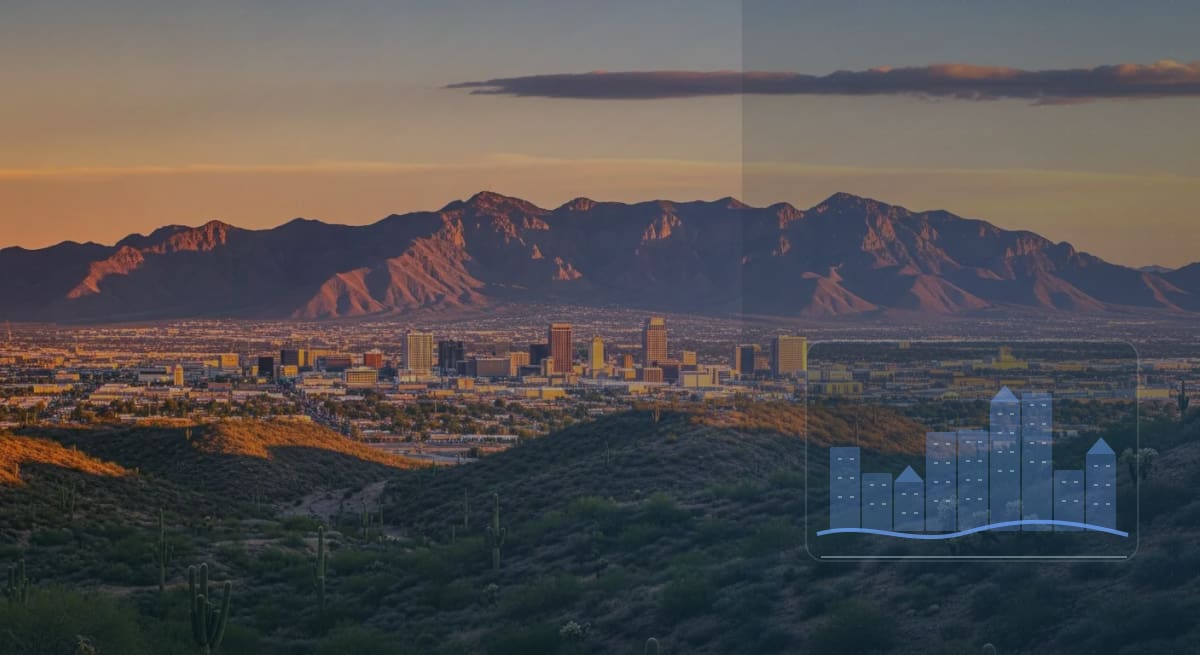
El Paso's Binational CRE Market: Trade, Military, and Healthcare Capital
$100 billion in annual cross border trade. 30,000 military personnel at Fort Bliss. 2.5 million people in the combined metro. El Paso is a market that rewards investors who understand it.
El Paso: Texas's Borderland Commercial Economy
El Paso operates in a commercial real estate market unlike any other in Texas. The city sits on the U.S.-Mexico border directly across from Ciudad Juarez, and the combined metro area of over 2.5 million people creates a binational economy that drives commercial demand across industrial, retail, healthcare, and logistics categories. El Paso is the largest U.S. city on the Mexican border and serves as a critical gateway for cross border trade, with billions of dollars in goods crossing through the Paso del Norte and Ysleta ports of entry annually. Fort Bliss, one of the largest military installations in the country, adds another layer of economic stability and commercial demand.
Capital flows differently in El Paso than in any other Texas metro. Industrial and logistics properties dominate deal volume, concentrated in the East Side and Montana Vista areas where distribution centers and manufacturing facilities serve cross border supply chains. Retail investment draws from a dual consumer base that includes both U.S. residents and cross border shoppers from Juarez. Healthcare real estate is expanding to serve a patient population that includes military families, retirees, and the broader borderland community. SBA lending punches above its weight here because El Paso's affordable property values keep most owner occupied deals within program limits.
El Paso's cap rates and property values offer an attractive proposition for investors familiar with the market. Compared to Austin, Dallas, and Houston, El Paso properties trade at significantly lower prices per square foot and higher cap rates, creating cash on cash returns that are difficult to achieve in the state's gateway markets. The trade off is less liquidity and slower appreciation, but for income focused investors, El Paso delivers stable, predictable returns backed by a diversified economy with minimal cyclicality.
The Economic Anchors Behind El Paso CRE
Why El Paso Borrowers Seek Capital
Underwriting in a Binational Economy
El Paso's binational economy creates underwriting considerations that are unique in Texas. Lenders evaluating El Paso retail deals need to understand the cross border shopping dynamic, where a significant portion of sales can come from Mexican nationals. Industrial properties tied to maquiladora supply chains require an understanding of cross border trade patterns and tariff policy sensitivity. Healthcare assets benefit from a patient base that draws from both sides of the border. These dynamics are well understood by lenders with El Paso experience but may be unfamiliar to lenders based outside the Southwest.
The city's relatively lower property values mean that loan amounts are smaller on average than in Austin, Dallas, or Houston. This can limit the interest of larger national lenders and make regional banks, credit unions, and community lenders more important capital sources for El Paso deals. SBA programs are particularly effective in El Paso because the city's property values keep deal sizes within SBA limits for most owner occupied transactions. CapitalAx connects El Paso borrowers with lenders who understand the market's unique dynamics.
Frequently Asked Questions
How does cross border trade affect El Paso commercial real estate?
Cross border trade is the single largest driver of industrial and logistics demand in El Paso. Warehouse and distribution properties along the border corridors benefit from billions in annual trade volume. Retail centers also benefit from cross border shopping by Ciudad Juarez residents. These dynamics create stable demand fundamentals that lenders who understand the market view favorably.
Does Fort Bliss impact commercial lending in El Paso?
Significantly. Fort Bliss provides a stable economic base that supports housing, retail, healthcare, and service businesses. The military's long term presence reduces economic cyclicality, which lenders value when underwriting El Paso commercial properties. Properties serving military families and personnel benefit from predictable demand.
Are cap rates in El Paso attractive compared to other Texas markets?
Yes. El Paso cap rates typically run 100 to 250 basis points higher than Austin, Dallas, or Houston, reflecting lower property values and less institutional competition. For income focused investors, El Paso delivers strong cash on cash returns with stable occupancy. The trade off is less appreciation potential and lower liquidity.
What types of businesses use SBA financing in El Paso?
Restaurants, retail stores, medical and dental practices, professional service firms, and small manufacturers are the most common SBA borrowers in El Paso. The city's affordable property values keep most owner occupied deals within SBA loan limits, making the 504 program's 10% down payment and fixed rates especially valuable.