
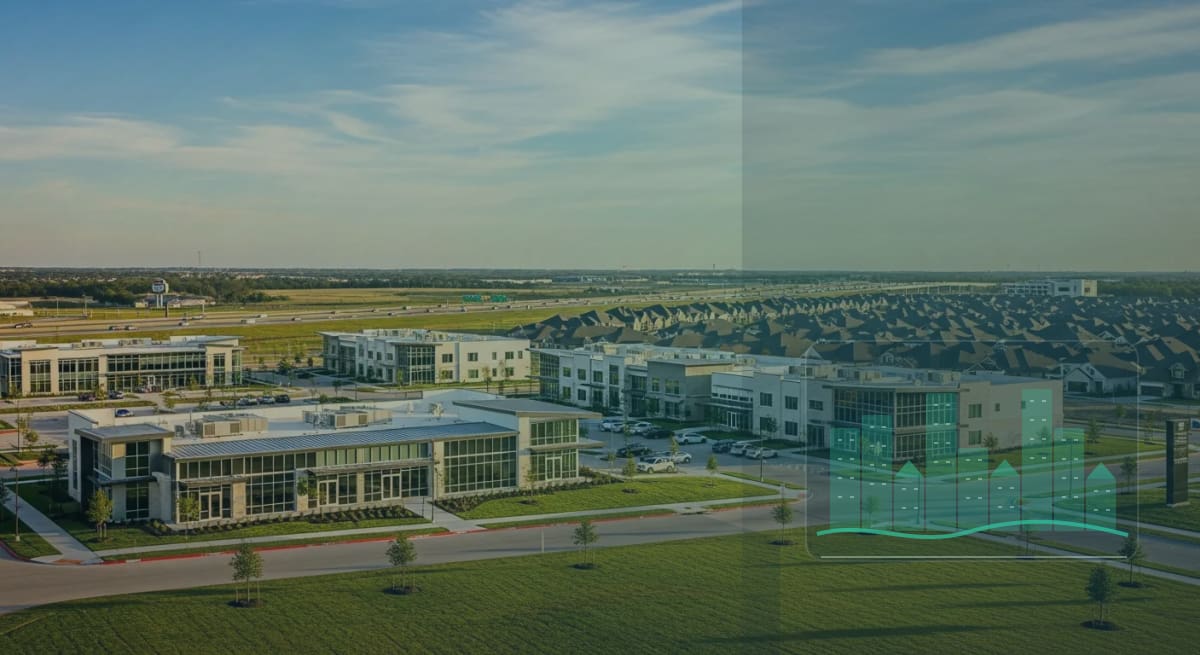
Kyle: Austin's Southern Growth Engine
Kyle has emerged as one of the most dynamic small cities in the Austin metro, consistently ranking among the fastest growing municipalities in the United States. Positioned along the Interstate 35 corridor between Austin and San Marcos, Kyle benefits from exceptional transportation connectivity and proximity to major employment centers. The city's population has more than doubled over the past decade, creating sustained demand for commercial services, retail space, and multifamily housing that continues to attract investors from across the region.
Kyle's commercial profile is shifting fast. What was a bedroom community five years ago now supports a pipeline of neighborhood retail, medical office, and mixed use projects driven by rooftop counts that finally justify commercial investment. The city has been proactive with economic development incentives and streamlined permitting, and that has accelerated the transition. For borrowers and investors, Kyle represents a cost basis play: land and construction costs run materially below Round Rock and Cedar Park, but the underlying growth trajectory is equally strong.
Kyle's affordability advantage relative to Austin and Round Rock continues to drive both residential migration and commercial investment. Land costs remain significantly lower than in northern Austin metro communities, enabling developers to pursue projects with favorable cost to rent ratios. As major employers expand their presence in the southern I 35 corridor, Kyle's commercial market is poised for continued growth across multiple property types.
What Drives Kyle's Commercial Expansion
Rapid residential growth, I 35 connectivity, and affordability migration from Austin are pulling commercial investment into Kyle.
Population Growth and Residential Development
Kyle's rapid population expansion, driven by master planned communities like Plum Creek and Waterleaf, generates consistent demand for retail, healthcare, and service oriented commercial properties that follow rooftops.
I 35 Corridor Connectivity
Kyle's position on Interstate 35 provides direct access to Austin, San Marcos, and San Antonio, making it an attractive location for logistics, distribution, and highway oriented retail development.
Hays County Government and Education
As part of Hays County's administrative footprint and home to growing school districts, Kyle benefits from stable public sector employment and education related development that supports local commercial activity.
Healthcare Expansion
The growing population has attracted healthcare providers including Baylor Scott & White and Seton, driving demand for medical office space and healthcare related commercial development throughout the city.
Affordability Migration from Austin
Families and businesses relocating from Austin's higher cost core to Kyle's more affordable environment create a sustained pipeline of commercial tenants and consumer demand for local services.
Kyle's Most Active Commercial Segments
Retail, multifamily, and medical office development are catching up to Kyle's residential rooftop count.
Retail Financing
Neighborhood retail centers and pad site developments along I 35 and FM 1626 are among Kyle's most active commercial property segments, serving the rapidly growing residential population with everyday services.
Learn MoreMultifamily Financing
Multifamily development in Kyle has surged to meet housing demand, with garden style apartments and townhome communities attracting investors seeking favorable rent growth in a lower cost submarket.
Learn MoreMixed Use Financing
Mixed use projects combining ground floor retail with upper level residential are gaining traction in Kyle's emerging town center areas, offering walkable environments for new residents.
Learn MoreLand Development Financing
Raw and entitled land parcels along the I 35 corridor and near planned infrastructure represent significant investment opportunities as Kyle's commercial footprint expands outward.
Learn MoreOffice Building Financing
Small format professional office and medical office buildings are emerging throughout Kyle as the population base supports local professional services and healthcare providers.
Learn MoreCapital Needs in the Kyle Market
Why borrowers and investors in Kyle seek commercial financing and how CapitalAx structures solutions for each scenario.
New Construction for Expanding Markets
Kyle's rapid growth creates strong demand for ground up construction financing as developers build retail centers, apartment communities, and medical offices to serve new residents moving to the area.
Land Acquisition and Entitlement
Investors are actively acquiring land along the I 35 corridor and near planned infrastructure improvements, requiring flexible land development loans to secure and prepare sites for future commercial projects.
Value Add Multifamily Strategies
Older apartment properties in Kyle present opportunities for renovation and repositioning, with borrowers seeking bridge financing to upgrade units and capture the spread between current and market rate rents.
Small Business Expansion Loans
Local entrepreneurs and franchise operators expanding into Kyle's growing market need SBA and conventional business financing to establish or grow their commercial presence in the community.
Retail Pad Site Development
Quick service restaurants, convenience stores, and service retailers pursuing pad site development along Kyle's major corridors require construction and permanent financing structured for single tenant retail properties.
Financing Kyle's Commercial Pipeline
These are the lending programs most frequently matched to deals in the Kyle market through our 350+ lender network.
Construction Loans
Ground up construction financing supports the development of new retail centers, apartment communities, and commercial buildings meeting Kyle's rapidly growing demand for commercial space.
Learn MoreSBA Loans
SBA 7(a) and 504 loans provide favorable terms for small business owners establishing or expanding operations in Kyle's fast growing commercial corridors.
Learn MoreDSCR Loans
DSCR loans allow Kyle investors to qualify for multifamily and rental property financing based on property cash flow rather than personal income documentation.
Learn MoreBridge Loans
Short term bridge financing enables investors to acquire and reposition Kyle properties quickly, taking advantage of the city's rapid appreciation and rental growth trajectory.
Learn MoreCommercial Mortgage
Conventional commercial mortgages provide long term stable financing for stabilized retail, office, and multifamily assets throughout the Kyle market.
Learn MoreTools for Kyle Investors
Commercial Mortgage and Loan Amortization Calculator
Calculate commercial mortgage payments, total interest, and a month by month loan amortization schedule.
Qualification Checker
Check which commercial loan programs you may qualify for based on your deal profile.
Deal Feasibility Analyzer
Analyze whether a commercial real estate deal pencils before you commit capital.
Loan Comparison Tool
Compare multiple loan scenarios side by side to find the best financing structure.
Southern I 35 Corridor Markets
Explore commercial real estate markets near Kyle where CapitalAx arranges financing.
Rooftop Driven Markets: How Population Growth Shapes Lending
Kyle is a rooftop driven market, which means commercial demand follows residential density with a lag. Neighborhoods reach a certain critical mass of households, then the retail, medical, and service businesses follow. Lenders evaluate Kyle deals by looking at rooftop counts, trade area household incomes, and the competitive supply pipeline within a defined radius. If you can demonstrate the residential density and the lack of competing commercial supply, Kyle deals get competitive terms.
I 35 frontage matters more in Kyle than in most Austin area markets. Properties with highway visibility and direct access command 30 50% rent premiums over secondary locations. National tenants and franchise operators prioritize these sites, which gives lenders stronger underwriting profiles. Secondary locations can still pencil, but they require more local market knowledge and often need bridge financing with longer lease up reserves.
The southern I 35 corridor from Kyle through San Marcos is still in a commercial build out phase, unlike the fully developed northern corridor through Round Rock and Georgetown. This means the development opportunity set is larger, but so is the execution risk. Lenders want to see experienced sponsors, realistic absorption timelines, and pre leasing activity before committing construction dollars to Kyle projects.