
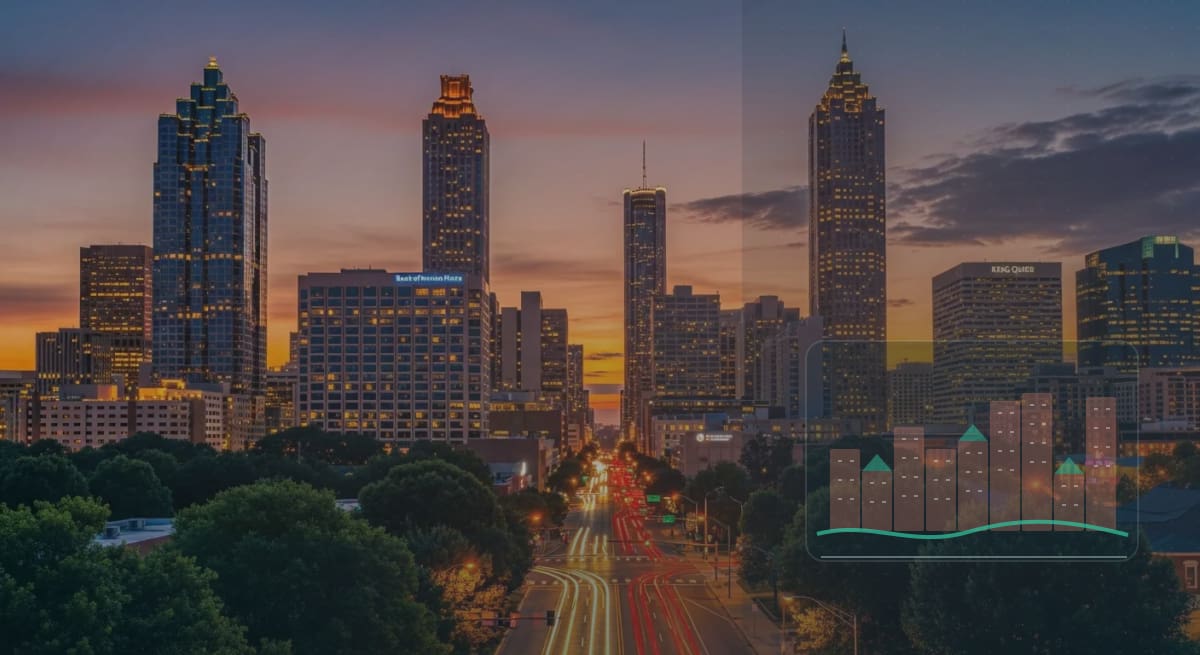
Commercial Real Estate & Business Growth in Georgia
Atlanta is the economic capital of the Southeast. Coca Cola, Home Depot, UPS, Delta, and Southern Company all call it home. Georgia's GDP tops $730 billion, powered by logistics, tech, healthcare, film, financial services, and manufacturing. The state has become the go to location for businesses that need to move products, people, and capital.
Logistics defines Georgia's economy. Hartsfield Jackson is the world's busiest airport and moves over 700,000 metric tons of cargo a year. It drives demand for hotels, offices, and services in Clayton, Fulton, and DeKalb counties. The Port of Savannah handles over 5.5 million container units a year, making it the largest single terminal facility in North America. The Mason Mega Rail Terminal has created a distribution corridor from Savannah to Atlanta along I 16 and I 75.
Georgia is the 'Hollywood of the South.' Film production spending tops $4 billion a year. Marvel, Netflix, Amazon, and every major studio shoot here. Trilith Studios in Fayetteville and Tyler Perry Studios in Atlanta have built permanent production infrastructure. The film industry drives demand for soundstages, hospitality, housing, retail, and mixed use development in surrounding communities.
Healthcare keeps growing. Emory, Piedmont, WellStar, and Grady anchor Atlanta's medical economy. Augusta has the Medical College of Georgia. An aging population across suburban and rural counties is pushing demand for outpatient facilities, urgent care, assisted living, and medical offices. Healthcare real estate is one of the strongest asset classes in the state.
Atlanta processes an estimated 70% of all U.S. payment transactions. NCR, Global Payments, Fiserv, and a growing cluster of fintech startups are based here. Georgia Tech and the Atlanta Tech Village feed the pipeline. Midtown and Buckhead are the primary destinations for tech focused office and commercial space.
Commercial Loan Programs in Georgia
Access every major commercial lending category through our 350+ lender network. Here are the programs most commonly used by Georgia borrowers.
Commercial Mortgage
Permanent financing for stabilized Georgia properties. Office in Buckhead, industrial along I 85, retail in Gwinnett, multifamily across metro Atlanta. Our lenders include Southeast focused national banks, regional lenders like Synovus and Atlantic Capital, life companies, and agency programs for multifamily.
Learn MoreC PACE Financing
Georgia's Peach State C PACE program may support qualifying energy, water, renewable energy, and resilience improvements for eligible commercial property in active jurisdictions. C PACE is repaid through a property tax assessment. Confirm the property's jurisdiction, project eligibility, existing mortgage lender requirements, and available provider before relying on the structure.
Learn MoreSBA Loans
SBA 7(a) provides up to $5 million for acquisitions, working capital, and equipment. SBA 504 offers fixed rate financing for owner occupied real estate with just 10% down. Georgia has a strong network of preferred SBA lenders. We regularly close SBA deals for medical practices, law firms, restaurants, manufacturers, and professional service firms.
Learn MoreBridge Loans
Bridge capital for acquisitions, value add projects, and lease up. Atlanta moves fast, especially in Midtown, Old Fourth Ward, and the BeltLine corridor. Bridge loans let you buy before a property is stabilized, fund renovations, and set up for permanent financing. Close in 10 to 21 days with 6 to 36 month terms.
Learn MoreConstruction Loans
Construction financing for multifamily, distribution centers, mixed use, hotels, and medical office. The growth corridors north of Atlanta along GA 400 and I 85 are especially active, along with the Savannah port area. Our lenders know Georgia's permitting process and submarket dynamics.
Learn MoreDSCR Loans
DSCR loans let Georgia investors qualify on rental income instead of personal tax returns. Popular in metro Atlanta suburbs where single family rental demand is strong. Available for single family, duplexes, small multifamily, and short term rentals. Minimum DSCR starts at 1.0x, with better rates at 1.25x and above. Active markets include Cobb, Gwinnett, Douglas, and Henry counties.
Learn MoreEquipment Financing
Equipment financing for logistics, manufacturing, film production, healthcare, and food processing. Spread costs over the useful life of the asset. We finance warehouse systems, manufacturing equipment, commercial fleets, medical imaging gear, and film production equipment. New and used options with 2 to 7 year terms.
Learn MoreBusiness Acquisition Loans
Hundreds of Georgia businesses change hands every year in manufacturing, healthcare, professional services, food and beverage, and tech. SBA 7(a) is the most common tool for deals under $5 million. It covers purchase price, working capital, and sometimes real estate. We also arrange conventional financing for larger acquisitions.
Learn MoreProperty Types Commonly Financed in Georgia
Georgia's commercial real estate market spans multiple asset classes. We arrange financing for all of them.
Georgia Commercial Lending Markets
CapitalAx has active broker presence and closed deals across Georgia. Explore our city level market pages.
Tools for Georgia Borrowers
Commercial Mortgage and Loan Amortization Calculator
Calculate commercial mortgage payments, total interest, and a month by month loan amortization schedule.
Qualification Checker
Check which commercial loan programs you may qualify for based on your deal profile.
Loan Comparison Tool
Compare multiple loan scenarios side by side to find the best financing structure.
Max Loan Calculator
Find out the maximum loan amount your property can support based on income and expenses.
Commercial Refinance Proceeds Calculator
Compare modeled loan limits and subtract payoff and costs to estimate cash out or an equity shortfall.
Property Financing Stress Test
Compare NOI, DSCR and supportable debt under changes in collected rent, expenses and borrowing rate.
Why Businesses and Investors Use Commercial Financing in Georgia
- A logistics company is building a 250,000 sq ft distribution center near the Port of Savannah. A national e commerce company has signed a letter of intent as anchor tenant. The project needs $22 million in construction financing with an interest reserve.
- An investor is buying a 200 unit Class B apartment complex in Kennesaw. Units need renovation and the amenity areas need upgrades. Bridge financing of $14 million covers the acquisition and renovation holdback. The plan is to refinance into agency permanent debt after 24 months.
- A film production support company near Trilith Studios in Fayetteville is buying a 40,000 sq ft building using SBA 504. They handle equipment storage, set construction, and production support. SBA 504 lets them buy with 10% down and a fixed rate.
- A healthcare system is building a 25,000 sq ft medical office in Gwinnett County. The northeast Atlanta suburbs are growing fast. The project needs construction financing followed by permanent financing after lease up. The building will house physician practices and an imaging center.
- A developer is converting a vacant 8 story office building in Midtown Atlanta into a 180 key boutique hotel. Business travelers, conventions, and BeltLine visitors drive demand. The project needs bridge financing to acquire, then construction financing for the conversion.
- An investor is buying a 60,000 sq ft shopping center near Pooler in Savannah's suburbs. The center is 85% occupied with below market rents. Bridge financing covers the purchase. The plan is to re tenant vacant space, renew leases at market rates, and refinance into permanent debt.
- A data center developer is building a 50,000 sq ft facility in metro Atlanta. Fintech companies and cloud providers are driving demand. The project needs construction financing from a lender who understands power systems, cooling, and data center build outs.
- A franchise group is opening four retail locations in high traffic Atlanta suburbs. Each location costs about $800,000 for buildout, equipment, signage, and working capital. SBA 7(a) and conventional term loans cover the costs.
Why Work With CapitalAx in Georgia
Southeast Market Expertise
Atlanta is the commercial capital of the Southeast. We know the deal dynamics in Buckhead, Midtown, Perimeter, and the northern suburbs. We know the industrial corridors feeding the Port of Savannah. And we know the secondary markets like Augusta, Macon, and Columbus. We match each deal to lenders who understand the specific submarket.
Industrial and Logistics Focus
Warehouse and distribution center deals have different underwriting than office or retail. Tenant credit, lease structure, and proximity to transportation nodes all matter. We work with lenders who specialize in industrial real estate and understand port adjacent properties, airport logistics, and the I 75 and I 85 corridors.
350+ Lender Network
Our network includes Southeast focused national banks, regional lenders like Synovus, private capital in the Atlanta market, Fannie Mae and Freddie Mac for multifamily, CMBS conduits for larger assets, and SBA preferred lenders. We match each deal to the best combination of terms, speed, and certainty.
Film Industry Experience
Studio facilities, production offices, and equipment warehouses have unique revenue models that general lenders may not understand. We connect studio developers, production companies, and entertainment related businesses with capital sources that know the industry.
Full Spectrum Deal Coverage
From a $300K SBA loan for a Savannah restaurant to a $30M construction loan for a port area distribution center, we handle the full range. We give a $500,000 medical office deal in Macon the same attention we give a $20 million multifamily project in Atlanta.
Resources for Georgia Borrowers
Educational articles and guides to help you with commercial lending.