
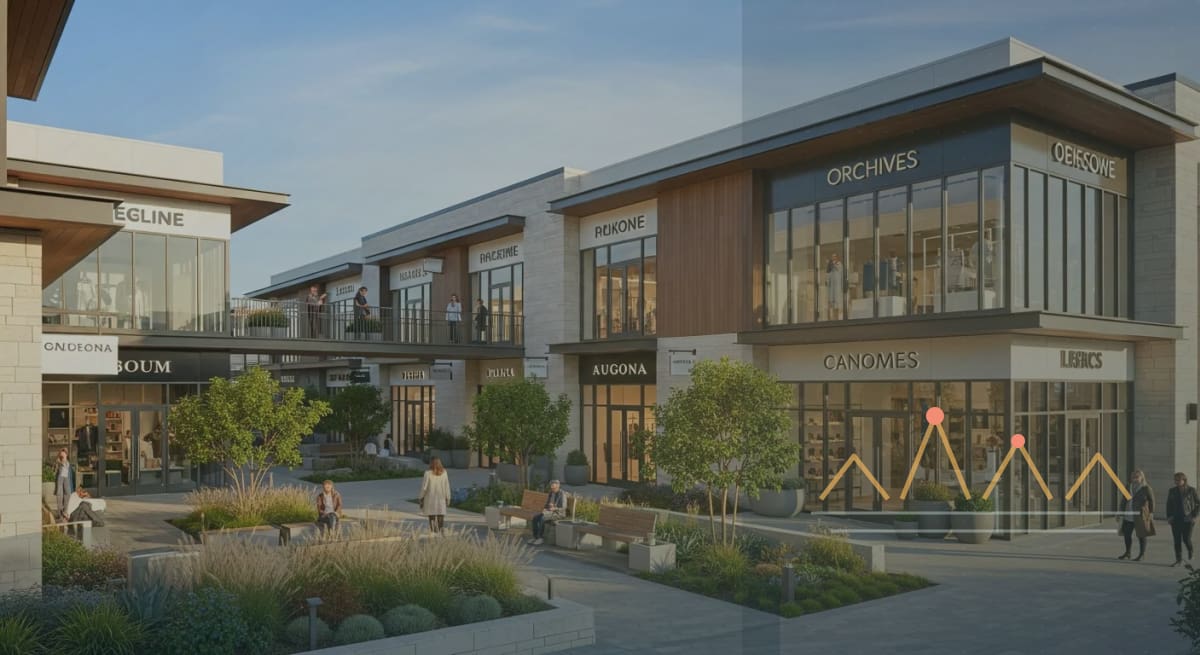
Commercial Retail Property Financing
Retail financing on this page means commercial real estate financing for retail property, not consumer point of sale financing, store credit, or customer installment programs. It can support a single tenant NNN investment, a multi tenant strip center, a shopping center, or an owner occupied retail building, depending on the property's income, lease structure, borrower, and lender. Retail underwriting commonly examines tenant credit, lease terms, co tenancy provisions, tenant mix, traffic, market demographics, and rollover risk. A single tenant NNN property underwrites differently from a strip center with local tenants on short leases. CapitalAx is a commercial loan broker, not a direct lender. We help borrowers compare conventional financing for stabilized retail, SBA options for eligible owner occupied property, bridge financing for repositioning or lease up, CMBS for certain stabilized assets, and construction financing where the project and lender support it. Actual pricing, leverage, construction terms, and approval depend on the property, borrower, market, and lender.
Common Borrower Profiles
- NNN retail property investors
- Shopping center owners
- Strip mall operators
- Retail pad developers
- Multi tenant retail investors
Available Loan Structures
- Conventional loans for stabilized retail
- SBA 504 for owner occupied retail
- Bridge loans for repositioning
- CMBS for credit tenant properties
- Construction loans for retail development
Underwriting Considerations
- Tenant credit quality and lease terms critical
- Co tenancy clauses and exclusivity provisions
- Traffic counts and demographic analysis
- Anchor tenant stability and replacement risk
- Operating expense recovery structures
Common Challenges
- E commerce competition and changing retail dynamics
- Anchor tenant vacancy risk
- Lease rollover and re tenanting costs
- Changing consumer behavior and foot traffic patterns
- Cap rate sensitivity to interest rate movements
Why CapitalAx for Retail Deals
Retail property financing requires matching the lending channel to the property and business plan, because a single tenant NNN asset and a multi tenant strip center with local tenants have different risk profiles and underwriting needs. CapitalAx helps borrowers compare lender options for stabilized retail, owner occupied SBA opportunities, and transition scenarios such as lease up or repositioning. The lender makes the final underwriting and approval decision.
Explore other property types we finance. Browse all property types.
Markets We Serve
Tools & Calculators
Shopping Center Underwriting Calculator
Estimate tenant income, NOI, value and debt service coverage while keeping leasing costs separate.
Property Financing Stress Test
Compare NOI, DSCR and supportable debt under changes in collected rent, expenses and borrowing rate.
Commercial Mortgage and Loan Amortization Calculator
Calculate commercial mortgage payments, total interest, and a month by month loan amortization schedule.
Commercial Real Estate Cap Rate Calculator
Calculate commercial real estate cap rate from NOI and property value to evaluate investment returns.