
Round Rock: The Austin Metro's Institutional Grade Submarket
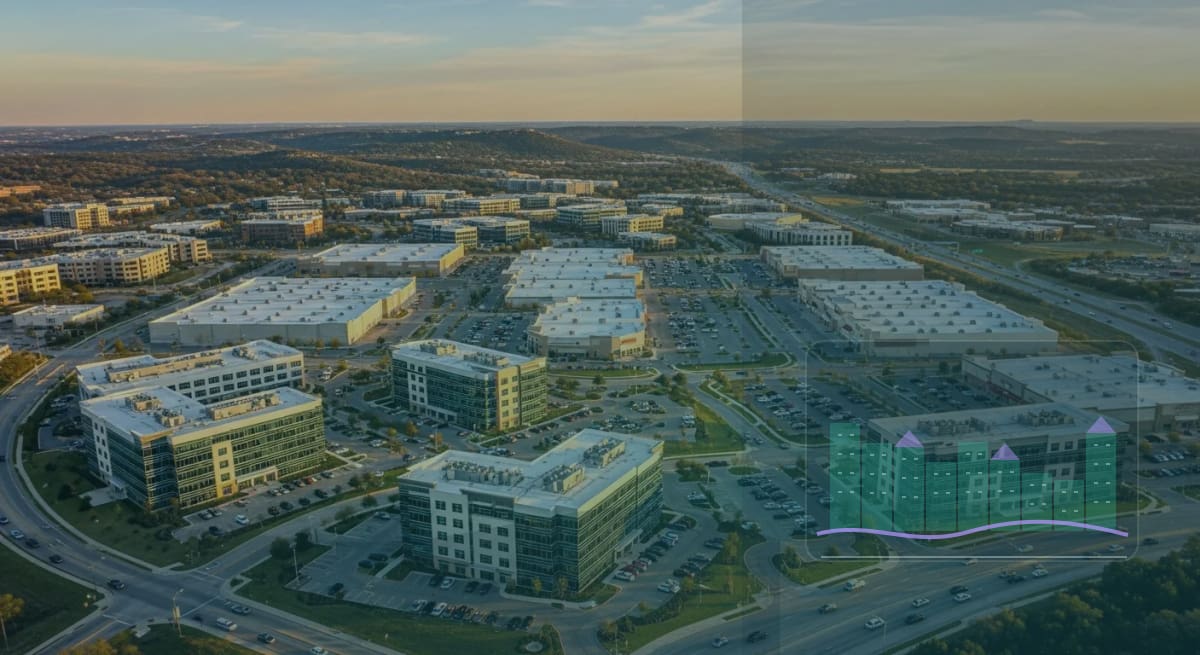
Round Rock is one of the Austin metro's most commercially mature submarkets, anchored by major corporate headquarters, a diversified employment base, and a well developed infrastructure network. Home to Dell Technologies' global headquarters and a growing cluster of technology, healthcare, and advanced manufacturing employers, Round Rock offers commercial real estate investors a rare combination of suburban livability and institutional grade investment opportunities. The city's commercial property market has evolved well beyond its early retail driven phase into a sophisticated mix of Class A office, industrial, healthcare, and mixed use assets.
Deliberate economic development over two decades gives Round Rock a tenant base that most Austin area suburbs cannot match. Dell anchors the tech sector. Baylor Scott and White and St. David's anchor healthcare. Texas State University adds an educational dimension. Kalahari Resorts put Round Rock on the tourism map nationally. This employer diversification is what institutional investors and REITs are recognizing: Round Rock delivers risk adjusted returns that compete with Austin's core market, but at a lower entry basis and with less cap rate compression.
Round Rock's positioning where Interstate 35, State Highway 45, and US Highway 79 converge creates exceptional regional connectivity that underpins commercial property values. The La Frontera and University Boulevard corridors have matured into major mixed use destinations, while emerging development areas along SH 45 and east Round Rock present greenfield opportunities. The city's fiscal stability, strong school district reputation, and quality of life continue to attract the workforce that sustains commercial real estate demand.
Round Rock's Commercial Demand Generators
A corporate HQ campus, healthcare hub, sports tourism engine, and diversified employer base generate consistent deal flow across every property type.
Dell Technologies and the Tech Sector
Dell's global headquarters and the surrounding technology companies employ thousands of workers in Round Rock, generating demand for office space, business services, hospitality, and supporting commercial infrastructure.
Healthcare and Medical Facilities
Baylor Scott & White, St. David's, and a network of specialty practices have established Round Rock as a regional healthcare hub, driving development of medical office buildings, surgery centers, and healthcare adjacent commercial properties.
Advanced Manufacturing and Distribution
Round Rock's industrial corridors attract advanced manufacturing, semiconductor supply chain, and distribution operations that benefit from the city's central location and proximity to major transportation infrastructure.
Texas State University Round Rock Campus
The Texas State University campus brings student population, academic employment, and associated commercial demand for housing, retail, and dining that enriches Round Rock's commercial tenant mix.
Sports and Entertainment Tourism
Dell Diamond, Kalahari Resorts, and Round Rock's sports tourism initiatives generate significant visitor traffic that supports hospitality, restaurant, and entertainment oriented commercial properties.
Corporate Relocations and Expansions
Round Rock continues to attract corporate headquarters and regional offices from companies drawn to Texas's business friendly environment, adding high wage jobs that strengthen commercial real estate fundamentals.
Commercial Asset Classes Active in Round Rock
Office, industrial, hospitality, and mixed use assets draw institutional interest alongside local value add investors.
Office Building Financing
Class A and B office buildings along University Boulevard and the La Frontera corridor serve Round Rock's technology and professional services employers, with healthy absorption driven by corporate expansion activity.
Learn MoreIndustrial Financing
Flex industrial and light manufacturing facilities in Round Rock's eastern corridors attract advanced manufacturing, logistics, and technology hardware operations seeking proximity to Dell and the regional supply chain.
Learn MoreHotel Financing
Round Rock's sports tourism brand and business travel demand support an active hospitality market with national hotel brands, extended stay properties, and resort style developments like Kalahari.
Learn MoreRetail Financing
Established retail corridors along I 35 and University Boulevard feature national tenants and service retailers, while new neighborhood centers serve Round Rock's expanding residential areas.
Learn MoreMultifamily Financing
Multifamily properties in Round Rock attract renters drawn to the city's employment centers and quality of life, with steady demand across garden style apartments and newer luxury communities.
Learn MoreMixed Use Financing
Mixed use developments combining office, retail, and residential components are reshaping Round Rock's major corridors, creating walkable environments that attract premium tenants and residents.
Learn MoreHow Round Rock Borrowers Deploy Capital
Why borrowers and investors in Round Rock seek commercial financing and how CapitalAx structures solutions for each scenario.
Corporate Campus and Office Acquisition
Investors acquiring office properties near Dell's headquarters and Round Rock's corporate clusters need competitive permanent financing with terms that reflect the stability of the city's technology anchored tenant base.
Industrial Portfolio Expansion
The growth of advanced manufacturing and distribution in Round Rock creates demand for portfolio level industrial financing as investors assemble multi building positions in the city's industrial corridors.
Hospitality Development and Renovation
Round Rock's expanding tourism and business travel market drives demand for hotel construction loans and renovation financing for properties seeking to capture increasing visitor traffic.
Mixed Use Development Capital
Large scale mixed use projects along Round Rock's growth corridors require structured development financing that can accommodate phased construction and multiple revenue streams across office, retail, and residential components.
Medical Office Investment
Healthcare system expansion in Round Rock creates opportunities for medical office building acquisition and development, with borrowers seeking financing structures that accommodate the unique requirements of healthcare tenancy.
Financing Solutions for Round Rock Properties
These are the lending programs most frequently matched to deals in the Round Rock market through our 350+ lender network.
Commercial Mortgage
Conventional commercial mortgages with competitive rates and terms finance stabilized office, retail, and industrial assets in Round Rock's established commercial corridors.
Learn MoreBridge Loans
Bridge financing supports value add strategies in Round Rock, enabling investors to acquire and reposition properties before transitioning to permanent debt once stabilization targets are achieved.
Learn MoreConstruction Loans
Construction financing for ground up office, industrial, and mixed use projects supports Round Rock's continued commercial expansion along its major growth corridors.
Learn Morehotel financing
Specialized hospitality financing addresses the unique underwriting requirements of Round Rock's hotel and resort properties, including seasonal revenue patterns and franchise considerations.
Learn MoreDSCR Loans
DSCR based lending allows Round Rock investors to finance income producing properties based on property level cash flow, streamlining the qualification process for experienced investors.
Learn MoreSBA Loans
SBA lending programs provide favorable terms for owner occupant businesses acquiring or expanding commercial facilities in Round Rock's diverse business environment.
Learn MoreTools for Round Rock Investors
Commercial Mortgage and Loan Amortization Calculator
Calculate commercial mortgage payments, total interest, and a month by month loan amortization schedule.
Max Loan Calculator
Find out the maximum loan amount your property can support based on income and expenses.
Construction Interest Reserve Calculator
Size interest reserve from the drawn balance, calculate loan to cost, and create an editable monthly draw schedule.
Capital Stack Calculator
Combine senior debt, mezzanine financing, and preferred equity to calculate blended capital cost and visualize the stack.
Connected Williamson County Markets
Explore commercial real estate markets near Round Rock where CapitalAx arranges financing.
What Economic Diversification Means for Lending Terms
Round Rock's commercial real estate market represents one of the Austin metro's most balanced investment environments, combining the growth characteristics of a rapidly expanding Sun Belt city with the institutional stability of a mature corporate market. Understanding this duality is critical for structuring financing that accurately reflects risk. Properties leased to investment grade technology tenants warrant different underwriting treatment than speculative developments in emerging corridors, and lenders who understand Round Rock's market segmentation can offer more competitive terms.
The city's economic diversification beyond any single employer or industry creates resilience that directly impacts commercial real estate financing availability and terms. Round Rock's employment base spans technology, healthcare, education, manufacturing, and hospitality, reducing the concentration risk that concerns lenders in less diversified markets. This economic breadth translates to broader capital availability and more favorable leverage ratios for well positioned commercial properties.
Round Rock's infrastructure investments, including toll road connections, utility capacity expansions, and the development of Kalahari Resorts, signal continued municipal commitment to commercial growth. Financing strategies should account for the positive externalities these investments create for nearby commercial properties, including potential appreciation from improved access, increased visitor traffic, and enhanced municipal services that support property values over the long term.