
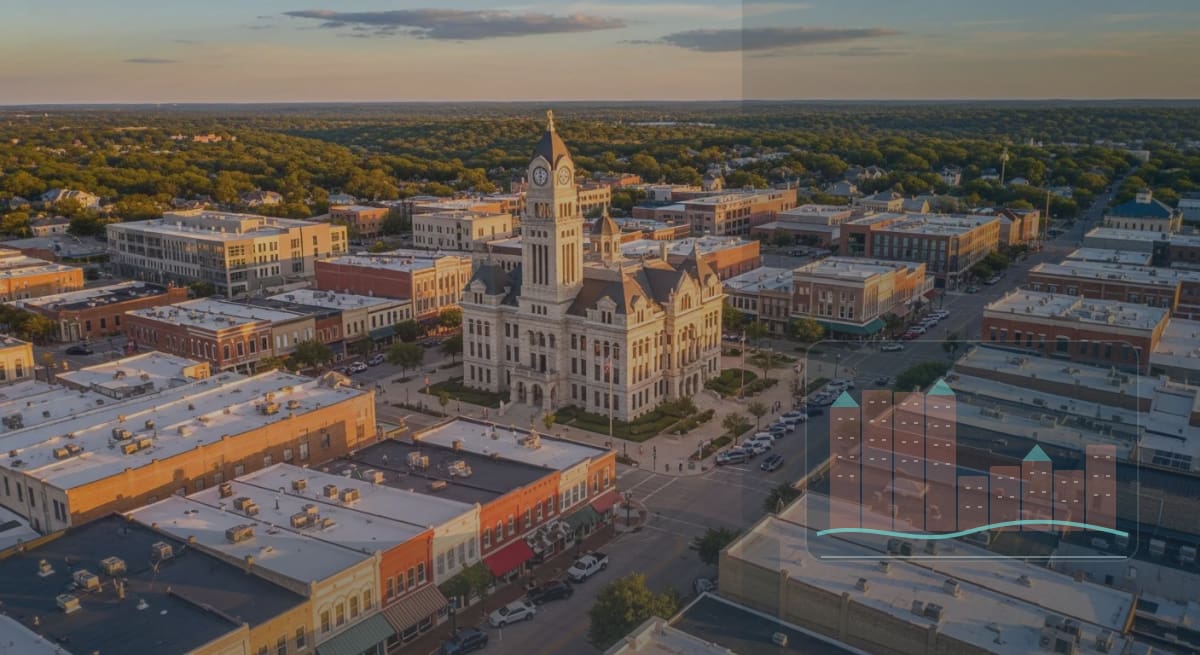
Georgetown: Two Markets Under One Name
Georgetown is one of the fastest growing cities in the country. It sits at the northern edge of the Austin metro along I 35. The city is the Williamson County seat, with a celebrated historic square and fast expanding suburban corridors. That mix of small town character and metro access draws residents and businesses alike. Commercial demand is strong across retail, office, healthcare, multifamily, and hospitality.
Think of Georgetown as two markets in one. Downtown has one of the best preserved courthouse squares in Texas. It supports boutique retail, dining, law offices, and tourism. Rents are premium because the setting drives foot traffic. Then there are the growth corridors along I 35, Williams Drive, and SH 130. Those serve big box retail, healthcare campuses, apartments, and industrial users. Different assets, different lenders, different strategies.
Three institutional anchors set Georgetown apart. The county government provides stable jobs and steady demand for office space. Southwestern University, the oldest in Texas, adds students, faculty, and cultural draw. Sun City, with over 9,500 homes, creates outsized demand for healthcare, assisted living, and senior focused retail. These anchors give Georgetown a stability that most fast growing suburbs lack.
What Drives Georgetown's Commercial Economy
Government jobs, Sun City seniors, tourism, and I 35 growth. Four pillars that keep this market stable and growing.
County Government
Georgetown is the Williamson County seat. The courthouse, county offices, and judicial facilities create stable government jobs. That drives steady demand for office space and legal services downtown.
Sun City Senior Community
Sun City has over 9,500 homes and is still growing. Its residents spend heavily on healthcare, dining, retail, and recreation. That creates commercial demand patterns unique to Georgetown.
Healthcare Growth
St. David's Georgetown Hospital, Baylor Scott and White clinics, and specialty practices are expanding. Medical office development is one of Georgetown's most active commercial segments.
Historic Square Tourism
Georgetown's courthouse square is called the most beautiful in Texas. Tourism foot traffic supports boutique retail, restaurants, and bed and breakfasts at premium rents.
I 35 Corridor
Georgetown's I 35 frontage draws regional retail, hotels, and commercial development. Open sites still remain along this high traffic corridor.
Southwestern University
The oldest university in Texas provides stable employment, student housing demand, and a cultural anchor that makes Georgetown more attractive to businesses and residents.
Georgetown Property Types by Segment
Historic downtown, I 35 highway commercial, senior housing, and medical office. Each carries a different risk and return profile.
Retail Financing
Retail ranges from boutique shops on the historic square to national chains along I 35. Grocery anchored centers are filling in as new neighborhoods build out.
Learn MoreOffice Building Financing
Office demand comes from law firms near the courthouse, medical practices throughout the city, and professional services firms serving Williamson County's growing population.
Learn MoreMultifamily Financing
Apartment development is picking up. Georgetown's job growth and proximity to Round Rock and Austin employment centers attract working age renters.
Learn MoreAssisted Living Financing
Sun City's senior population drives demand for assisted living, memory care, and senior housing. The aging in place trend means more residents will need higher levels of care each year.
Learn MoreHotel Financing
Tourism, county government travel, and I 35 highway traffic support the hotel market. Opportunities include boutique properties downtown and branded hotels on the highway corridor.
Learn MoreLand Development Financing
Open commercial land along I 35, Williams Drive, and SH 130 offers development upside as Georgetown's population pushes northward.
Learn MoreGeorgetown Capital Scenarios
Why borrowers and investors in Georgetown seek commercial financing and how CapitalAx structures solutions for each scenario.
Historic Square Acquisitions
Buying a building on the courthouse square means working with heritage structures. Financing needs to account for renovation costs, possible historic tax credits, and adaptive reuse.
Senior Housing Development
Sun City's residents are aging into higher care needs. Purpose built assisted living and memory care facilities are in demand. Lenders underwrite these based on operator experience and market penetration rates.
Medical Office Construction
Hospitals and physician groups are expanding across Georgetown. Medical office projects benefit from strong tenant credit and long lease terms that lenders favor.
I 35 Corridor Development
Open I 35 frontage sites attract hotels, retail centers, and mixed use projects. Construction financing for highway visible properties with regional draw potential.
Residential to Commercial Conversion
As Georgetown's commercial core expands, some residential properties are converting to commercial use. Bridge loans fund the renovation and rezoning process.
Lending Programs for Georgetown Properties
These are the lending programs most frequently matched to deals in the Georgetown market through our 350+ lender network.
SBA Loans
SBA loans fit Georgetown's owner occupied businesses well. Law firms, medical practices, and square retailers all qualify for favorable terms.
Learn MoreCommercial Mortgage
Permanent loans for stabilized Georgetown office, retail, and multifamily properties. Strong demographics and government employment anchor the underwriting.
Learn MoreConstruction Loans
Construction financing for medical offices, apartments, and commercial projects along Georgetown's growth corridors.
Learn MoreBridge Loans
Bridge loans for acquiring and renovating Georgetown properties. Works well for historic buildings and older assets benefiting from the city's growth.
Learn Moreassisted living financing
Specialized lending for senior housing and assisted living projects serving Georgetown's large 55 plus population.
Learn MoreDSCR Loans
DSCR loans qualify based on property cash flow. Good fit for Georgetown multifamily and commercial assets with proven income.
Learn MoreTools for Georgetown Investors
Commercial Mortgage and Loan Amortization Calculator
Calculate commercial mortgage payments, total interest, and a month by month loan amortization schedule.
Qualification Checker
Check which commercial loan programs you may qualify for based on your deal profile.
Loan Comparison Tool
Compare multiple loan scenarios side by side to find the best financing structure.
Commercial Refinance Proceeds Calculator
Compare modeled loan limits and subtract payoff and costs to estimate cash out or an equity shortfall.
Northern I 35 Corridor Markets
Explore commercial real estate markets near Georgetown where CapitalAx arranges financing.
Two Markets, Two Underwriting Approaches
Georgetown has two lending personalities. Downtown historic properties attract community banks and SBA lenders who understand heritage buildings, tourism driven retail, and small professional offices. I 35 corridor properties attract conventional commercial lenders who underwrite based on traffic counts, trade area demographics, and comparable suburban deals. Knowing which market your property serves determines which lenders to approach.
Sun City changes Georgetown's math. Over 9,500 homes of 55 plus residents spend more per capita on healthcare than any other local demographic. They shop differently, eat out differently, and eventually need assisted living. That creates commercial demand for medical offices, senior housing, and specialty retail that most cities Georgetown's size simply do not have.
Being the county seat gives Georgetown a built in floor. Government jobs and courthouse activity generate steady demand for office space and legal services regardless of the economy. Combine that with healthcare growth and population expansion, and Georgetown has a more balanced risk profile than suburbs that depend entirely on private sector jobs.